Why Outlet Clothes Never Fit Quite Right — And What That's Actually Doing to Your Wallet

You've been there. You're walking through an outlet, you spot a pair of jeans from a brand you've worn for years, and the tag says your size. You don't try them on because — honestly — why would you? You know your size. You grab them, pay, drive home, and discover they're either two inches too short, oddly boxy through the hips, or just... off in some way that's hard to explain.
This isn't a coincidence. And it's not your imagination.
Outlet store sizing inconsistency is one of the most overlooked dynamics in discount retail, and once you understand what's behind it, you'll shop very differently.
The Sizing Problem Is Baked In From the Start
Here's something most shoppers don't realize: a significant portion of what fills outlet store racks was never designed to match full-price merchandise in the first place. Retailers — especially major apparel brands — produce what the industry calls "made-for-outlet" (MFO) goods. These are items manufactured exclusively for the outlet channel, often using slightly different specs, fabrics, and yes, fit patterns than what you'd find at the flagship store or on the brand's main website.
That means the "size 10" pants at the outlet might have been cut from a slightly different pattern block than the "size 10" pants at the full-price location. Same label, different reality.
Add to that the fact that true overstock — items that genuinely didn't sell at full price — often comes from older production runs with older sizing standards. Fashion sizing has been drifting toward "vanity sizing" (where sizes run progressively larger over time) for decades. An older overstock piece tagged as a medium might fit more like a small by today's standards.
The result? A fitting room lottery every single time.
Why Retailers Don't Exactly Rush to Fix This
Here's where the psychology gets interesting. You'd think inconsistent sizing would be a problem retailers want to solve. But the economics tell a more complicated story.
When a customer grabs something in the wrong size at an outlet, they often don't find out until they're home. At that point, returning to a physical outlet — which is frequently located 30 to 45 minutes from most shoppers' homes — feels like a hassle that outweighs the effort. So a lot of those items just... stay. The customer absorbs the loss. The retailer keeps the revenue.
For online outlet purchases, the math shifts slightly, but not always in the shopper's favor. Many outlet-affiliated online platforms have restocking fees, limited return windows, or require customers to pay return shipping. That $29 blouse that doesn't fit? Suddenly returning it costs $8 in shipping plus the time to repackage it. A lot of shoppers just let it go.
Retailers know this. Return friction is a feature, not a bug, in the outlet business model.
The Impulse Buy Connection
Sizing uncertainty also works hand-in-hand with the urgency that outlet shopping creates. Outlet environments — whether physical or digital — are engineered to make you feel like inventory is scarce and deals are fleeting. That pressure discourages careful evaluation. You're more likely to skip the fitting room when you feel like someone else is eyeing the same rack.
This is deliberate. The combination of perceived scarcity and price excitement activates the brain's reward circuitry in a way that overrides careful, measured decision-making. You stop asking "does this really fit?" and start asking "can I get to the register before someone else does?"
Research in consumer psychology consistently shows that bargain-framed purchases lower the threshold for what shoppers consider "good enough." A small fit compromise feels more acceptable when you're focused on the discount rather than the garment. Retailers benefit from that mental shortcut every single day.
How to Actually Verify Fit Before You Buy
None of this means you should avoid outlets — far from it. Real savings absolutely exist. But protecting yourself from the sizing trap takes a bit of deliberate effort.
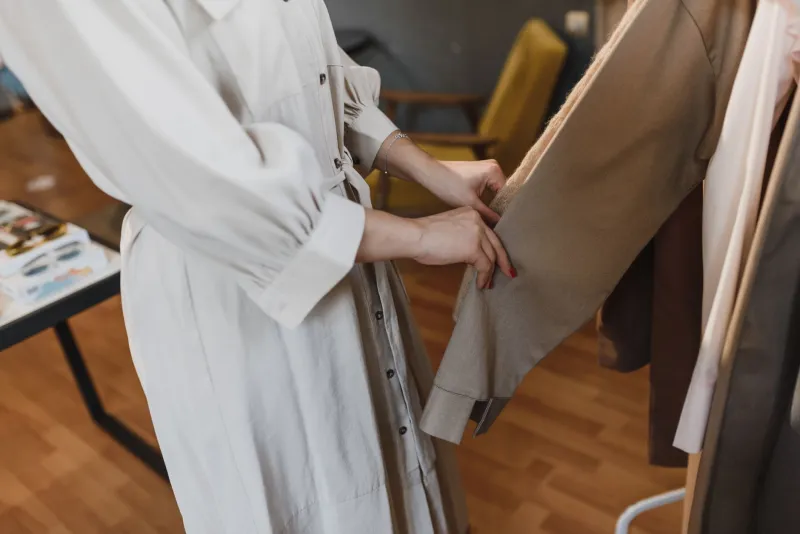
Always try it on if you're in a physical store. This sounds obvious, but outlet shoppers skip fitting rooms at a much higher rate than full-price shoppers. Don't. The five minutes you spend in the fitting room could save you a 45-minute round trip later.
Check the garment's label for production details. Some clothing tags include factory codes or season identifiers. While decoding these isn't always straightforward, noticing that a piece has an older production date can tip you off that sizing standards may differ from current items.
Measure, don't assume. Especially for online outlet purchases, look for size charts and compare them against actual measurements rather than the size you think you are. Brands vary wildly, and outlet-specific items may not match the size charts posted for full-price merchandise.
Read the reviews for fit comments. On online outlet platforms, shoppers often leave notes about whether items run large, small, or short. This crowd-sourced sizing intelligence is genuinely useful — don't skip it.
Understand the return policy before you buy. Know the return window, whether you'll pay return shipping, and whether you're eligible for a full refund or just store credit. That information changes the risk calculation entirely.
The Bigger Picture for Bargain Shoppers
Outlet shopping rewards preparation. The shoppers who walk away with genuine wins aren't the ones who grab the most stuff the fastest — they're the ones who slow down just enough to make sure what they're buying is actually right for them.
Sizing inconsistency in the outlet channel is real, it's widespread, and in many cases it's structurally convenient for retailers. But knowing that changes how you engage with it. You stop being a passive participant in someone else's inventory management strategy and start making decisions that actually serve your closet — and your budget.
At the end of the day, a deal you return isn't a deal. It's just a temporary loan of your money to a retailer, with a side of inconvenience. Shop with that in mind, and the outlet experience gets a whole lot better.