The Size on That Outlet Tag Is a Lie — And the Math Proves It
You grabbed a pair of pants in your usual size. Same brand you've bought a hundred times. You get home, try them on again in better lighting, and something feels... off. They fit, technically, but barely. Or maybe they don't fit at all and you can't figure out why.
Here's what's actually going on: the number on that tag and the actual dimensions of that garment are two different conversations. And the brands? They're having both conversations at the same time, very deliberately.
The Outlet Sizing Gap Nobody Talks About
This isn't just about vanity sizing running in reverse. What's happening at outlet stores is more specific — and honestly, more calculated — than that.
When a brand makes a garment for a department store like Nordstrom or Bloomingdale's, it's built to a certain spec sheet. Chest measurement, rise, inseam, sleeve length — everything gets locked in and matched against the size on the label. A women's size 10 blazer from a major brand at a full-price retailer will generally hit within a half-inch of its stated measurements.
Now take that same brand's outlet line. In a lot of cases, those garments are made-for-outlet — meaning they were never in the main line at all. They were produced specifically to be sold at a lower price point, which means cost-cutting had to happen somewhere. And one of the quietest places brands shave costs? Fabric.
A quarter-inch less fabric across the chest. A slightly narrower shoulder seam. A hem that sits a half-inch higher than the standard version. None of these changes are dramatic on their own. But stack them up and you've got a garment that's functionally a size smaller than what the tag says — without anyone technically lying to you.
Real Numbers, Side by Side
Let's get concrete. A well-known American sportswear brand (we're keeping names out of this, but you'd recognize it immediately) sells a women's chino in size 12 through department stores and through its own outlet locations.
The department store version: 32-inch waist, 10.5-inch rise, 30-inch inseam. The outlet version, same size 12 tag: 31-inch waist, 9.75-inch rise, 29.5-inch inseam.
That's nearly a full inch off the waist and three-quarters of an inch off the rise. On a chino, that's the difference between comfortable and fighting your waistband all day. And here's the kicker — both pairs are labeled identically. Same brand. Same size. Different garment.
This pattern shows up across denim, dress shirts, and outerwear too. One men's dress shirt comparison clocked a 1.5-inch difference in chest width between the outlet and department store version of the same size. For a guy who's right at the edge of a size, that half-inch here and there is the entire ballgame.
The Inconsistency Problem Is Actually Worse Than the Shrinkage
Here's where it gets really messy. If every outlet garment were consistently one size smaller than labeled, you could just adjust and move on. Grab a size up, done.
But the sizing doesn't shrink consistently. It varies by style, by season, and sometimes by production run. A brand might produce one style of outlet jeans closer to spec while another style in the same store runs dramatically small. Two shirts hanging next to each other, same tag, same brand — one fits true and one runs narrow through the shoulders.
This inconsistency isn't random. It's a byproduct of outlet lines being manufactured in smaller batches, sometimes across multiple overseas factories, with less quality control applied to sizing standards. The brand is prioritizing the price point, not the fit precision.
What this means for you as a shopper: you can't just "size up" and call it a day. You have to treat every single outlet garment as an unknown quantity until you've actually checked it.
The Codes Outlet Workers Use (And You Can Learn Them Too)
Here's something most shoppers don't know: outlet store employees — particularly at brand-owned outlet stores — often have an internal shorthand for identifying made-for-outlet pieces versus genuine markdowns from the main line.
The most common method involves the SKU or style number printed on the internal tag. At many brands, made-for-outlet pieces carry a style number that includes a specific suffix or prefix — often something like "MFO," "OL," or a number sequence that starts differently than mainline items. If you see "MFO" anywhere on the internal label, you're looking at a garment that was never in a full-price store. It was born in the outlet.
Some brands use color-coded price tags to signal the same thing. A white tag might mean a genuine markdown from the main line; a yellow tag might indicate made-for-outlet. The system varies by brand, so it's worth spending five minutes Googling "[brand name] outlet tag colors" before your next shopping trip. Plenty of brand-specific forums and Reddit threads have cracked these codes already.
Another tell: check the care label. Full-price garments and their outlet counterparts often have slightly different care instructions or country-of-origin labels, because they were made in different facilities. It's a subtle clue, but it's there.
How to Actually Shop Around This
None of this means outlet shopping isn't worth it — it absolutely still can be. You just need to go in with the right toolkit.
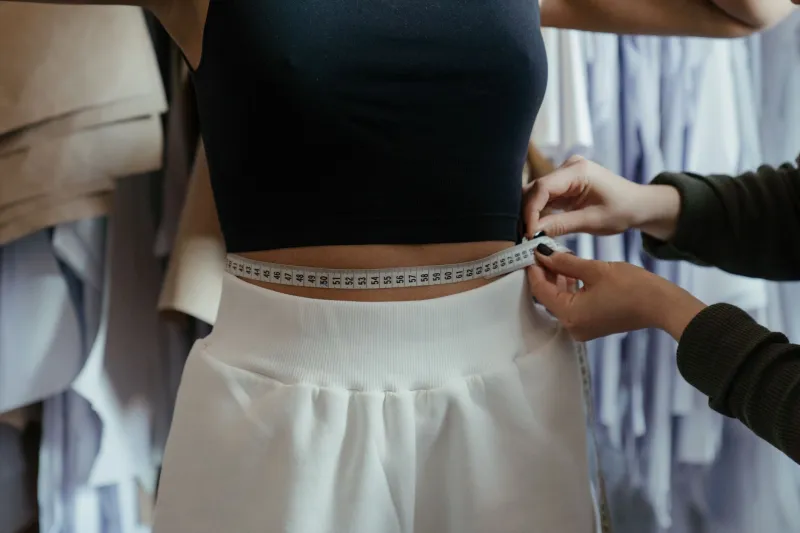
Bring a soft tape measure. Seriously. It's small, it's cheap, and it changes everything. Before you try anything on, pull the tape across the chest, waist, or wherever fit matters most to you and compare it to your own measurements. Don't trust the tag. Trust the inches.
Know your body measurements cold. Not just your size — your actual numbers. Waist in inches. Chest in inches. Inseam. Once you know these, you can evaluate any garment on the rack without even stepping into a fitting room.
Look for the style code. Check that internal label before you fall in love with something. If it's made-for-outlet, calibrate your expectations accordingly. It's not automatically a bad garment — but it's a different garment, and you should be paying less for it.
Try before you commit, every time. Even if you've bought that brand in that size before. Outlet sizing is inconsistent enough that last season's win doesn't guarantee this season's.
The Bottom Line
Brands aren't technically lying to you when they put a size 10 tag on a garment that fits more like an 8. Sizing has never been a regulated standard in the US — there's no federal rule that says a size 10 has to measure X inches. So brands have always had room to move the goalposts, and outlet manufacturing just takes that flexibility further.
Once you understand what's actually happening, though, you're not a victim of it anymore. You're just a shopper who knows to measure first and trust tags second. And at the end of the day, that knowledge is worth more than any discount on the rack.